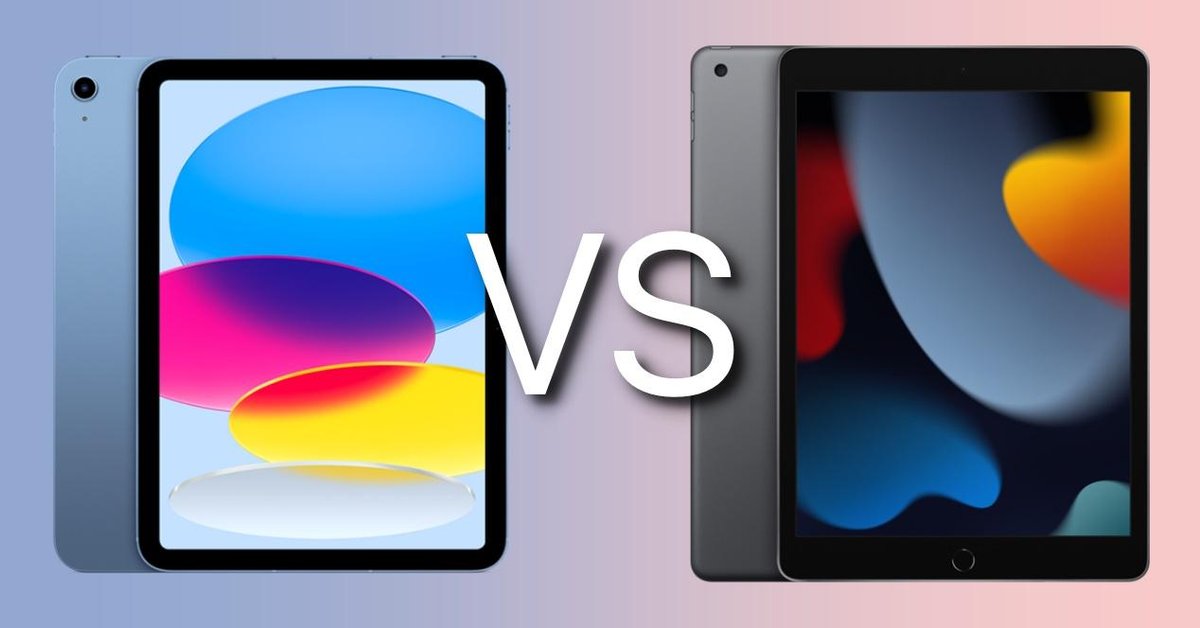
If you've ever felt like you need a degree in Apple products just to pick out a new tablet, you're not alone. The sheer variety of iPads on the market can be a head-spinning experience, especially when you're trying to figure out if a seemingly older model like the iPad 9th Gen 256GB vs. Other iPad Models Comparison truly makes sense for your needs today.
Apple's tablets offer a sweet spot between the small screen of an iPhone and the bulk of a laptop, perfect for everything from streaming movies to sketching, note-taking, and staying connected online. But which one is your perfect match? We're cutting through the marketing speak to give you a clear, no-nonsense guide to whether the venerable iPad 9th Gen, particularly with its generous 256GB storage, still holds its own against the latest and greatest.
At a Glance: Deciphering Your iPad Choice
- iPad 9th Gen (256GB): A discontinued but widely available budget hero. It's the last iPad with a physical home button and headphone jack, offering solid everyday performance. The 256GB option is fantastic for those who download a lot or want to keep it long-term.
- iPad 10th Gen: The current entry-level model. More modern design, slightly faster chip, and USB-C. Often a better value than the 9th Gen unless you find a significant discount on the older model.
- iPad Air (2024): The "Goldilocks" option. Strong performance with the M2 chip, a more premium feel than the basic iPads, but without the Pro's hefty price tag.
- iPad Mini (2024): Pure portability. Ideal for travelers, students, or kids who prioritize a small, lightweight device. Offers a newer A17 Pro chip, though still slower than the M-series.
- iPad Pro (2024): The ultimate powerhouse. Featuring the M4 chip, stunning display, and advanced features, it's built for professionals who need top-tier performance daily. Overkill for most casual users.
- Storage Matters: 256GB is a sweet spot for many users, offering plenty of room for apps, photos, videos, and even some creative projects without constantly worrying about space.
The iPad Landscape: Why So Many Choices?
Apple's strategy has evolved into offering an iPad for virtually every demographic and budget. From the student needing a basic note-taker to the graphic designer creating masterpieces, there's an iPad designed to fit. This diversification, while a boon for consumers, can also create a decision paralysis. Do you go for the bleeding edge, or is a tried-and-true workhorse enough?
The key distinction often boils down to three main pillars: Performance (chipset), Display Technology, and Accessories/Connectivity. As we delve into the iPad 9th Gen 256GB and its peers, keep these in mind, as they largely dictate the price and capabilities of each model.
Deep Dive: The iPad 9th Gen 256GB – A Budget Workhorse?
The iPad 9th Generation, while officially discontinued by Apple, remains widely available through various retailers, often at tempting prices. It represents the last of an era for Apple's mainstream tablets, retaining the iconic Touch ID home button and, notably for many, the beloved 3.5mm headphone jack.
At its core, the iPad 9th Gen packs the A13 Bionic chip. This isn't the latest and greatest silicon, but it's far from a slouch. Originally introduced with the iPhone 11 series, the A13 is still perfectly capable of handling everyday tasks with ease. We're talking smooth web browsing, fluid social media scrolling, responsive email management, and running a vast majority of apps and games without a hitch. For media consumption—streaming Netflix, YouTube, or Apple TV+—it’s excellent. Light photo editing, casual gaming, and even some moderate productivity tasks like word processing or spreadsheet work are well within its capabilities.
The 9th Gen sports a 10.2-inch Retina display with 2160-by-1620 resolution, offering crisp visuals and 500 nits of brightness. While it lacks the more advanced Liquid Retina or ProMotion technology of its pricier siblings, it's still a vibrant and enjoyable screen for general use. True Tone technology adjusts the display to match the color temperature of the ambient light, making for a more comfortable viewing experience.
Crucially, we're focusing on the 256GB storage variant here. Many budget iPads often come with a restrictive 64GB of storage, which, for many users, can fill up surprisingly quickly. High-resolution photos, 4K videos, larger apps, and a growing library of games can easily eat into 64GB. The 256GB option on the iPad 9th Gen transforms it from a potentially constrained device into a very capable long-term companion. It means less worrying about offloading files, more freedom to download movies for offline viewing, and peace of mind that your iPad won't be constantly nagging you about storage space. This generous storage capacity significantly boosts the 9th Gen's appeal as a value proposition.
It supports the Apple Pencil (1st generation), which is great for students taking notes or anyone who enjoys sketching. For typing, it works with Apple's Smart Keyboard Folio and a wide range of Bluetooth keyboards, though not the more premium Magic Keyboard. Connectivity includes Wi-Fi 802.11ac and Bluetooth 4.2, along with Gigabit-class LTE for cellular models. It retains the Lightning connector for charging and data transfer.
For someone seeking a solid, reliable, and affordable iPad for general use, media consumption, casual gaming, or educational purposes, the iPad 9th Gen 256GB remains a compelling option—especially if you can find it at a significantly discounted price. To truly understand if it's your ideal match, it helps to compare it directly. Dive deeper into the specifics of this model by opting to explore the iPad 9th Gen 256GB.
Head-to-Head: iPad 9th Gen vs. Its Closest Successor – The iPad 10th Gen
The most immediate comparison for the 9th Gen is its successor, the iPad 10th Generation. The 10th Gen is currently Apple's lowest-priced currently manufactured iPad, often retailing at a similar (or only slightly higher) price point than the 9th Gen when it was new. This makes their comparison critical for understanding current value.
| Feature | iPad 9th Gen | iPad 10th Gen |
|---|---|---|
| Chipset | A13 Bionic (6-core CPU, 4-core GPU) | A14 Bionic (6-core CPU, 4-core GPU, 16-core Neural Engine) |
| Display | 10.2″ Retina, 2160x1620, 500 nits, True Tone | 10.9″ Liquid Retina, 2360x1640, 500 nits, True Tone |
| Design/Form Factor | Touch ID Home Button, Large Bezels | All-screen design, Touch ID in top button, thinner bezels |
| Ports | Lightning Connector, 3.5mm Headphone Jack | USB-C Connector, NO Headphone Jack |
| Front Camera | 12MP Ultra Wide (portrait orientation) | Landscape 12MP Ultra Wide Center Stage |
| Rear Camera | 8MP Wide, ƒ/2.4 (1080p video) | 12MP Wide, ƒ/1.8 (4K video) |
| Apple Pencil | 1st Gen, USB-C (via adapter) | 1st Gen (via adapter), USB-C |
| Keyboard Support | Smart Keyboard, Bluetooth Keyboards | Magic Keyboard Folio, Bluetooth Keyboards |
| Wi-Fi | Wi-Fi 802.11ac | Wi-Fi 6 |
| Bluetooth | Bluetooth 4.2 | Bluetooth 5.2 |
| Colors | Space Gray, Silver | Blue, Pink, Yellow, Silver |
| Storage Options | 64GB, 256GB | 64GB, 256GB |
| Where the 10th Gen Wins: |
- Modern Design: The 10th Gen's all-screen design, larger 10.9-inch Liquid Retina display, and Touch ID in the top button give it a significantly more contemporary look and feel.
- USB-C: This is a major upgrade. USB-C is becoming the universal standard, meaning fewer cables to carry and compatibility with a broader range of accessories like external drives and monitors.
- A14 Bionic Chip: While not a massive leap from the A13, the A14 offers slightly faster performance and a more advanced Neural Engine, ensuring better longevity for demanding apps and iOS updates.
- Improved Cameras: Both front and rear cameras are better, especially the landscape-oriented front camera which is ideal for video calls.
- Wi-Fi 6 & Bluetooth 5.2: Faster and more reliable wireless connectivity.
- Magic Keyboard Folio: This accessory offers a more laptop-like typing experience than the 9th Gen's Smart Keyboard.
Where the 9th Gen Holds Its Own: - Price (Potentially): If you can find the 9th Gen 256GB at a significantly lower price than the 10th Gen 256GB, it might still offer better value.
- Headphone Jack: A non-negotiable for many who prefer wired headphones or external microphones without dongles.
- Touch ID Home Button: Some users simply prefer the tactile familiarity of the physical home button.
- Lightning Connector: If you already have many Lightning accessories, this might be a convenience.
The Verdict: For most users today, the iPad 10th Gen offers substantial upgrades for a similar or slightly higher cost. The modern design, USB-C, and better cameras make it a more future-proof choice. The 9th Gen 256GB only makes sense if you find it at a deep discount, or if the headphone jack and Lightning port are absolute must-haves for your specific setup. Otherwise, you're investing in an older design with diminishing returns on its budget price.
Stepping Up: iPad 9th Gen vs. iPad Air (2024 & Older)
Moving beyond the entry-level iPads, the iPad Air series positions itself as the "Goldilocks" option: more power and premium features than the standard iPad, but not quite the professional-grade cost of the Pro.
iPad 9th Gen vs. 2024 iPad Air (M2 Chip)
This is where the performance gap truly widens. The 2024 iPad Air is a completely different beast:
- Chipset: The Air sports the M2 chip, a desktop-class processor. This is a monumental leap from the 9th Gen's A13 Bionic. The M2 handles intensive video editing, complex graphic design, demanding games, and multitasking with ease that the A13 simply cannot match. This is also why it supports more advanced features like Apple Intelligence.
- Display: The Air offers a larger (11-inch or 13-inch) Liquid Retina display with thinner bezels and a more modern aesthetic. While still 60Hz, it’s a more immersive viewing experience.
- Design & Accessories: An all-screen design, Touch ID in the top button, and USB-C are standard. It supports the more advanced Apple Pencil Pro and Apple Pencil (USB-C), as well as the Magic Keyboard, turning it into a very capable laptop alternative.
- Storage: Starting at 128GB, the Air offers ample storage, including 256GB, 512GB, and 1TB options.
- Price: Expect a significant price jump from the 9th Gen.
Who is the Air for? Users who need substantial power for more demanding tasks—students in specific STEM fields, light creative professionals (artists, editors), advanced gamers, or anyone who wants a premium iPad experience without going full Pro. For general browsing, email, and media, the iPad Air is overkill compared to the 9th Gen. If you're looking for an iPad to significantly boost your productivity, the Air is a strong contender.
iPad 9th Gen vs. Discontinued 5th-Generation iPad Air (M1 Chip)
Even the older 5th-gen iPad Air, featuring the M1 chip, is a major upgrade from the 9th Gen.
- The M1 chip, though older than the M2, still vastly outperforms the A13. It can handle most tasks an average user throws at it with ease and comes with Apple Intelligence support.
- It also features a Liquid Retina display, USB-C, and supports the Apple Pencil (2nd generation) and Magic Keyboard.
- Storage options were 64GB or 256GB.
The Recommendation: While the 5th-gen Air might be found at a discount, it's generally advisable to skip this model and opt for the newer 2024 iPad Air. The M2 chip offers a meaningful performance bump, and you're getting the latest design and accessory compatibility for a more future-proof investment. A comprehensive iPad buying guide would strongly advise against older Air models unless the discount is truly extraordinary.
Compact Power: iPad 9th Gen vs. iPad Mini (2024 & Older)
The iPad Mini line is all about portability. It offers the full iPad experience in a pocketable (well, large pocket) form factor.
iPad 9th Gen vs. 2024 iPad Mini (A17 Pro Chip)
The 2024 iPad Mini is a significant leap for the compact model:
- Chipset: It features the A17 Pro chip, a newer generation than the 9th Gen's A13 Bionic (and even the 10th Gen's A14). This makes it incredibly fast for its size, handling demanding apps and games with ease. However, remember the M-series chips in the Air and Pro are still more powerful.
- Size: Its defining feature. At 8.3 inches, it's significantly smaller and lighter than the 9th Gen's 10.2-inch screen.
- Display: Liquid Retina display with anti-reflective coating, True Tone, and Wide color (P3).
- Design: All-screen design, Touch ID in the top button, USB-C charging, and support for the Apple Pencil Pro and Apple Pencil (USB-C).
- Storage: Available in 128GB, 256GB, and 512GB. The 256GB option here is a popular choice for balancing portability with ample storage.
- Cameras: Offers 4K video recording on the rear and a Landscape 12MP Center Stage front camera.
Who is the Mini for? Travelers, commuters, readers, or children. It's fantastic for quick tasks, reading e-books, portable gaming, or as a secondary device for on-the-go content consumption. If screen size isn't your priority and you value extreme portability, the Mini's power in such a small package is impressive. However, if you need more screen real estate for drawing, heavy typing, or split-screen multitasking, the 9th Gen (or 10th Gen) is a better choice.
iPad 9th Gen vs. Discontinued 5th-Generation iPad Mini (A15 Bionic)
The older 5th-gen iPad Mini (2021) featured the A15 Bionic chip (faster than A13 but slower than A17 Pro). It also lacked Apple Intelligence features. While it supported Apple Pencil (2nd gen) and USB-C Pencil, and offered a 64GB storage option, its appeal is limited today.
The Recommendation: Unless you find the 5th-gen Mini at a truly remarkable discount and specifically need a miniature 64GB iPad, the 2024 iPad Mini is the superior choice for its A17 Pro chip and Apple Intelligence features. For those seriously considering which Apple Pencil is compatible with each iPad, the Mini's support for the latest Pencils is a clear advantage.
The Professional's Choice: iPad 9th Gen vs. iPad Pro (2024)
This comparison is less about deciding between two similar devices and more about understanding the vast difference in purpose and capability. The iPad Pro line is Apple's most powerful, premium, and expensive tablet.
iPad 9th Gen vs. 2024 iPad Pro (M4 Chip)
The 2024 iPad Pro is in a league of its own:
- Chipset: The M4 chip is a beast, offering performance that rivals many high-end laptops. This is light-years beyond the 9th Gen's A13 Bionic. The M4 enables incredibly demanding tasks like professional-grade video editing, 3D rendering, and complex CAD work with ease.
- Display: The Ultra Retina XDR display (tandem OLED) is simply stunning. Available in 11-inch or 13-inch, it offers extreme brightness, incredible contrast, and ProMotion (adaptive 120Hz refresh rate) for buttery-smooth scrolling and drawing.
- Design: Thinner and lighter, with an edge-to-edge display.
- Storage: Starts at a generous 256GB and goes up to 2TB, with options for a standard or matte nano-texture display on 1TB/2TB models.
- Accessories: Supports the Apple Pencil Pro (with haptic feedback and barrel roll), and the Magic Keyboard (with an aluminum palm rest and larger trackpad), truly blurring the line with a laptop.
- Camera System: Much more advanced camera array, including a LiDAR scanner for augmented reality applications.
Who is the iPad Pro for? This is for dedicated creative professionals (graphic designers, video editors, music producers), developers, or power users who rely on their iPad for mission-critical, high-performance tasks daily. It's for those who will genuinely utilize the M4 chip's power, the superior display, and the advanced accessory ecosystem.
The Verdict: For the average consumer looking for a general-purpose tablet, the iPad Pro is excessive and not worth the significant cost. It's an incredible piece of technology, but its price tag reflects capabilities that most users will never fully tap into. The iPad 9th Gen 256GB serves a fundamentally different audience—one focused on value and core functionality rather than bleeding-edge performance.
The 256GB Question: Is It Enough Storage?
Why emphasize the 256GB variant of the iPad 9th Gen? In today's digital world, storage fills up faster than you might think.
- Apps: Many popular apps, especially games or productivity suites, can be several gigabytes each.
- Photos & Videos: High-resolution photos and 4K videos take up massive amounts of space. Even if you use cloud services, having a local cache is beneficial.
- Offline Content: Downloading movies or TV shows for travel can quickly consume tens of gigabytes.
- Documents & Projects: Students with numerous PDFs, presentations, and large project files will appreciate the extra room. Artists with Procreate files, musicians with GarageBand projects—these all add up.
64GB vs. 256GB: - 64GB: Often seen as the entry-level default. It's fine for very light users who primarily stream content, browse the web, and don't download many apps or keep local files. However, it's very easy to hit its limits and constantly manage storage.
- 256GB: This is the sweet spot for the vast majority of users. It offers enough headroom to download dozens of apps and games, store years of photos and videos, and keep plenty of offline media or work documents without constant worry. It significantly extends the usable life of your iPad before you hit storage bottlenecks.
- Higher Tiers (512GB, 1TB, 2TB): These are usually reserved for the iPad Air and Pro models, catering to professional users with massive files, extensive video projects, or those who truly want absolute peace of mind for years to come.
For a comprehensive breakdown on how to choose the right iPad storage capacity, consider your current digital habits and how you plan to use your iPad over the next few years. For the 9th Gen, 256GB is almost always the smarter, more future-proof choice than 64GB.
Key Decision Criteria: How to Choose YOUR iPad
Beyond technical specifications, your personal needs and priorities should dictate your iPad purchase.
- Budget: This is often the primary filter.
- Strict Budget ($$$): Look for deep discounts on the iPad 9th Gen 256GB, or consider the iPad 10th Gen.
- Mid-Range ($$$$): iPad Air offers excellent value and performance.
- No Holds Barred ($$$$$): iPad Pro is your choice.
- Intended Use: What will you primarily do with it?
- Media Consumption (Netflix, YouTube, reading): iPad 9th/10th Gen.
- Notes, Light Productivity (email, Word, casual browsing): iPad 9th/10th Gen.
- Creative Hobbies (digital art, basic video editing): iPad Air, or a very well-discounted 9th Gen for beginners.
- Gaming (casual to moderate): iPad 9th/10th Gen.
- Gaming (demanding, high-fidelity): iPad Air, iPad Mini, or iPad Pro.
- Professional Creative Work (4K video, 3D, complex design): iPad Pro.
- Portability (travel, commute): iPad Mini.
- Performance Needs:
- A13 Bionic (iPad 9th Gen): Good for everyday tasks, casual gaming, media.
- A14 Bionic (iPad 10th Gen): Slightly better, same use case, longer software support.
- A17 Pro (iPad Mini): Excellent performance for its size, great for gaming and demanding mobile apps.
- M1/M2 (iPad Air): Desktop-class performance, capable of advanced creative and productivity tasks.
- M4 (iPad Pro): Unmatched power for professionals, truly blurring lines with laptops.
- Display & Design Preferences:
- Traditional Home Button, Bezels, Lightning Port: iPad 9th Gen.
- All-Screen, Touch ID Top Button, USB-C: iPad 10th Gen, Air, Mini, Pro.
- ProMotion (120Hz refresh rate) & XDR: iPad Pro only.
- Smallest Size: iPad Mini.
- Largest Size: 13-inch iPad Air or iPad Pro.
- Accessory Ecosystem:
- Apple Pencil (1st Gen) / Smart Keyboard: iPad 9th Gen, iPad 10th Gen.
- Apple Pencil (2nd Gen) / Magic Keyboard: Discontinued 5th Gen Air/Mini.
- Apple Pencil Pro / Magic Keyboard Folio / Magic Keyboard: Latest Air, Mini, Pro. Understanding Apple Pencil compatibility is key for artists and note-takers.
- Future-Proofing: If you want your iPad to last many years with the latest software updates and run demanding apps, generally aim for a newer chip (M-series or A17 Pro). The 9th Gen's A13 Bionic will eventually hit its limits sooner.
Common Misconceptions & FAQs
Q: Is the iPad 9th Gen too old to buy in 2024?
A: Not necessarily. While discontinued, its A13 Bionic chip is still capable for daily tasks. However, its value hinges on a significant discount, as the 10th Gen offers more modern features for a comparable new price.
Q: Can I really do professional work on a non-Pro iPad?
A: It depends on the "professional work." Light photo editing, document creation, and basic design work are feasible on the iPad Air or even the 9th/10th Gen. For heavy video editing, 3D rendering, or complex graphic design, the iPad Pro's M-series chip and ProMotion display are indispensable.
Q: Does the headphone jack matter?
A: For some, absolutely. If you rely on wired headphones, external microphones for audio recording, or specific assistive devices, the 9th Gen is the last standard iPad to offer it. Otherwise, Bluetooth headphones are the norm.
Q: What about Apple Intelligence? Does it matter for me?
A: Apple Intelligence is a suite of AI features launching with iOS 18, and it requires an iPad with an M1 chip or newer. This means the 9th Gen (A13 Bionic), 10th Gen (A14 Bionic), and 5th Gen Mini (A15 Bionic) will not support Apple Intelligence. If these advanced AI capabilities (like enhanced writing tools, image generation, or smarter Siri) are important to you, you'll need at least an iPad Air (5th Gen M1 or newer), iPad Mini (2024 A17 Pro or newer), or an iPad Pro. This is a significant factor for future-proofing. A deeper dive into essential iPad accessories often covers these advanced features.
The Verdict: Is the iPad 9th Gen 256GB the Right Pick for You?
So, after dissecting the entire iPad lineup, where does the iPad 9th Gen 256GB stand?
It's the undisputed budget champion—if you can get it for the right price.
- You Should Consider the iPad 9th Gen 256GB If:
- Your budget is strict, and you find it at a significantly lower price than the iPad 10th Gen (we're talking hundreds of dollars less, not just fifty).
- You value the headphone jack and/or the physical Touch ID home button.
- Your primary uses are media consumption, web browsing, email, light gaming, casual note-taking, and basic productivity.
- You need ample local storage but don't want to pay for a premium device. The 256GB option is a major selling point here, offering freedom without breaking the bank.
- You already own Lightning accessories and prefer to stick with them.
- You Should Look Elsewhere If:
- You want a modern, all-screen design with thinner bezels and USB-C connectivity. The iPad 10th Gen is the immediate step up.
- You require the fastest performance for demanding apps, intensive gaming, or professional creative work. Look towards the iPad Air or iPad Pro.
- Apple Intelligence features are important to your future usage. The 9th Gen won't support them.
- You prioritize portability above all else. The iPad Mini is a better fit.
- The price difference between the 9th Gen 256GB and the 10th Gen 256GB is negligible. In this scenario, the 10th Gen is the clear winner for its modern upgrades.
In essence, the iPad 9th Gen 256GB is a fantastic entry point into the iPad ecosystem for the value-conscious consumer who understands its limitations and can grab it at a deeply discounted price. It provides a robust, reliable tablet experience that still serves the needs of millions. But for most, the future-facing features and slightly better performance of the 10th-generation iPad make it the default choice in the entry-level segment, unless your needs align perfectly with the 9th Gen's specific offerings and an irresistible sale comes along.